<< Back to Learning Center
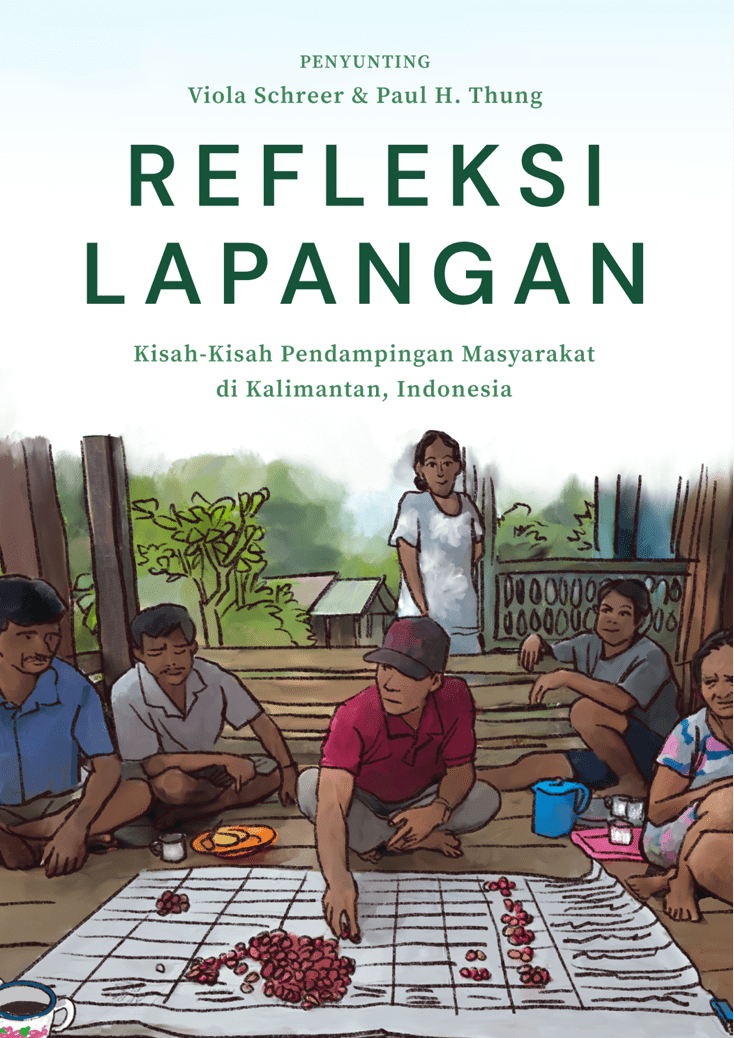
Field Reflections: Stories of community engagement in Indonesian Borneo

Field Reflections contains seventeen accounts from staff of two non-governmental organisations (NGOs) in Indonesian Borneo, who facilitate conservation and development programmes in partnership with local and Indigenous communities. Guided by two social anthropologists, the authors document personal and organisational learning about local history, social change, economic relations, and institutional dynamics. Community engagement, in these stories, is characterised by moral ambition, personal relationships, and complex dilemmas.
Key points
The voices of those carrying out community engagement on the ground are often absent from policy forums, academic journals, and the boardrooms of NGOs and funding agencies. Consequently, new targets and approaches are frequently developed without optimally considering the insights of and burdens put on field workers. By making their perspectives more visible, Field Reflections encourages practitioners, researchers, and donors to learn from and support this crucial form of expertise.
Suggested citation
Schreer, V., & Thung, P. H. (Eds.). (2026). Field Reflections: Stories of Community Engagement in Indonesian Borneo. Yayasan Tambuhak Sinta and Yayasan Planet Indonesia. https://doi.org/10.5281/zenodo.19084539
Share