<< Back to Learning Center
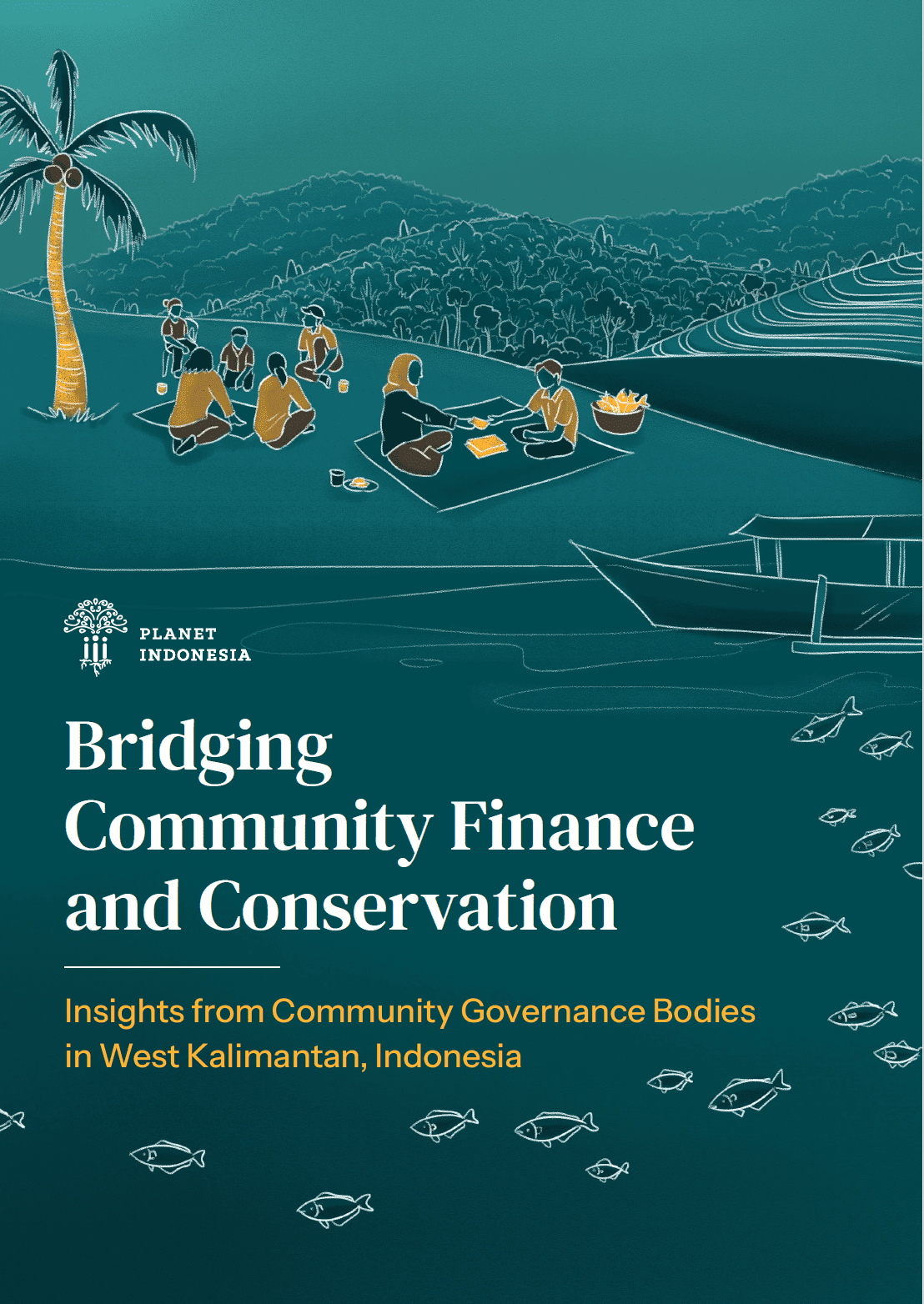
Bridging Community Finance and Conservation

This technical report investigates the relationship between financial inclusion initiatives and environmental conservation outcomes in West Kalimantan, Indonesian Borneo. The study is grounded in YPI's community-led governance model with Community Governance Bodies (CGBs). These bodies integrate savings and loan services with natural resource management, offering zero-interest loans with flat administrative fees as an alternative to exploitative informal lending.
The research draws on two primary data sources: monthly savings and loan records from 39 CGBs spanning six administrative districts, and a Participatory Impact Assessment (PIA) based on 38 focus group discussions with 476 participants. Using these datasets, the authors evaluate four theoretical pathways; the Governance Effect, the Debt Cycle Effect, the Human Capital Effect, and the Goodwill Effect, through which financial inclusion may contribute to improved conservation outcomes.
Key points
• 72% of focus groups cited both financial security and environmental management as outcomes of community finance activities
• Over 10,000 individual loans issued since 2018; 41% taken out by women
• Group loan net profit margins ranged from 18–21% across districts, exceeding typical benchmarks
• Education was the second most common reason for individual loans, suggesting downstream conservation literacy benefits
• The Goodwill Effect was evidenced by communities like Dabong village, which initially rejected YPI's model but later sought its services after trust was built through neighboring communities
Suggested citation
Straw, A., Thung, P., Damatashia, P., Sagita, N., Muflihati, Kartikawati, S., & Miller, A. (2026). Bridging community finance and conservation: Insights from community governance bodies in West Kalimantan, Indonesia. Yayasan Planet Indonesia.
Share