<< Back to Learning Center
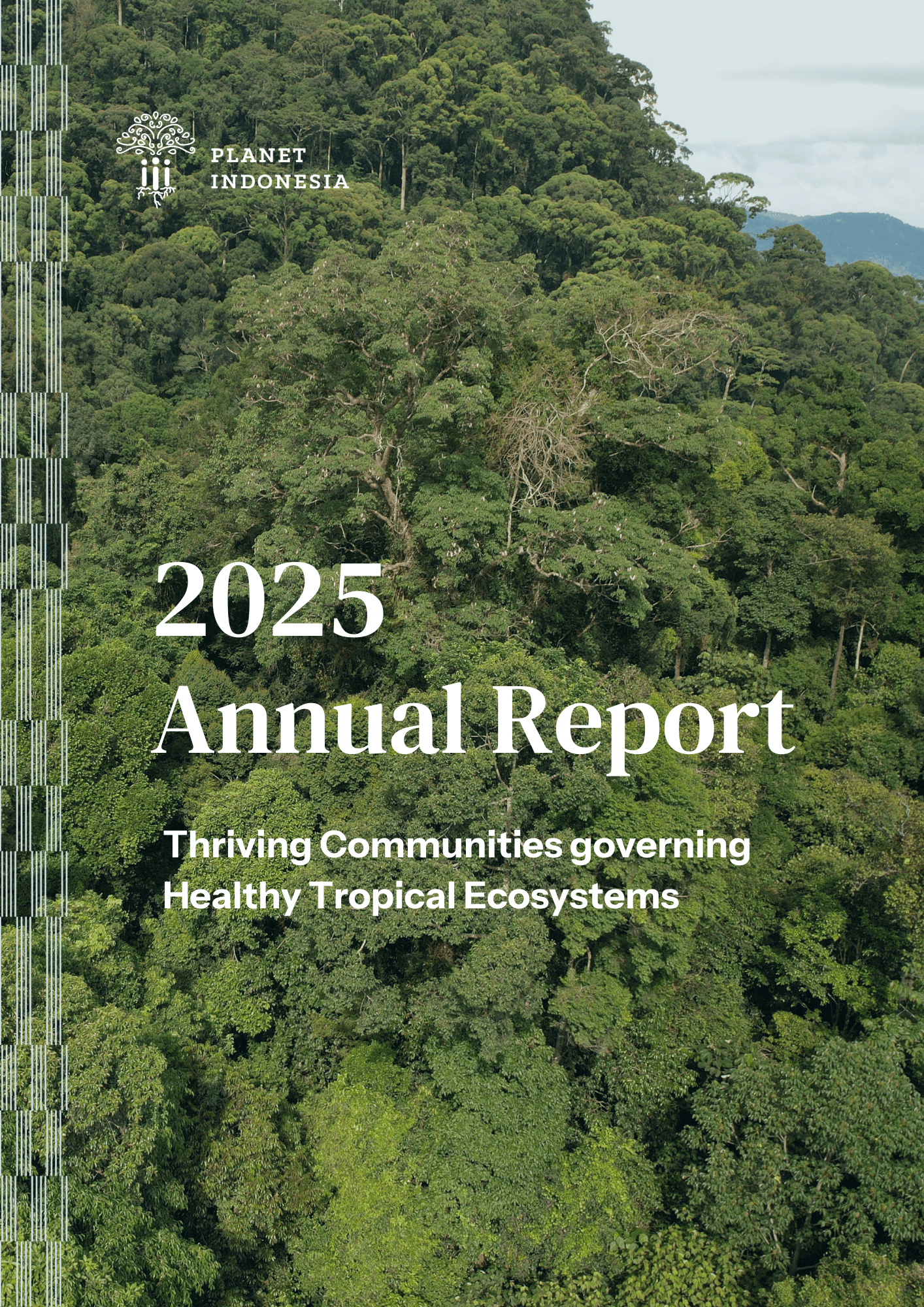
Planet Indonesia’s 2025 Annual Report

2025 was a year of upheaval and uncertainty. As global powers shifted priorities away from climate solutions and conservation, slashed global aid, and cut civic spaces and programs, it was a reminder to us again of who should hold the power. Planet Indonesia works from a clear belief: conservation works when power and authority, not just responsibility, returns to the communities that live within delicate ecosystems. 2025 marked a step up in our efforts to shift the power to frontline communities. 102 Community Governance Bodies (CGBs) are now governing more than 1.29 million hectares of forests, mangroves, and marine ecosystems, and have strengthened their socio-economic systems with our support.
Key points
- 1.29 million hectares are governed by 102 Community Governance Bodies (CGBs) and a further 751,000 hectares influenced through network building and alliances.
- Planet Indonesia’s Core Model has reached over 42,000 families.
- There has been a 160% reduction in the "deforestation gap".
- Partner sites in Sulawesi saw a 2.7x reduction in forest loss, while two sites in Sumatra cut deforestation by 44% and 61%.
- Combined encroachment, hunting, and logging dropped by over 90% after five years of community-led management.
- Total community assets in West Kalimantan grew to approximately USD $175,000 (IDR 2.90 billion), up from IDR 2.46 billion in 2024.
- Partner-led conservation costs approximately $1.29 per hectare, compared to $2.27 for direct delivery by Planet Indonesia staff.
- Planet Indonesia now collaborates with 10 locally rooted Civil Society Organizations (CSOs) across Indonesia.
Suggested citation
Planet Indonesia. (2025). 2025 Annual Report. Pontianak, West Kalimantan: Planet Indonesia.
Share