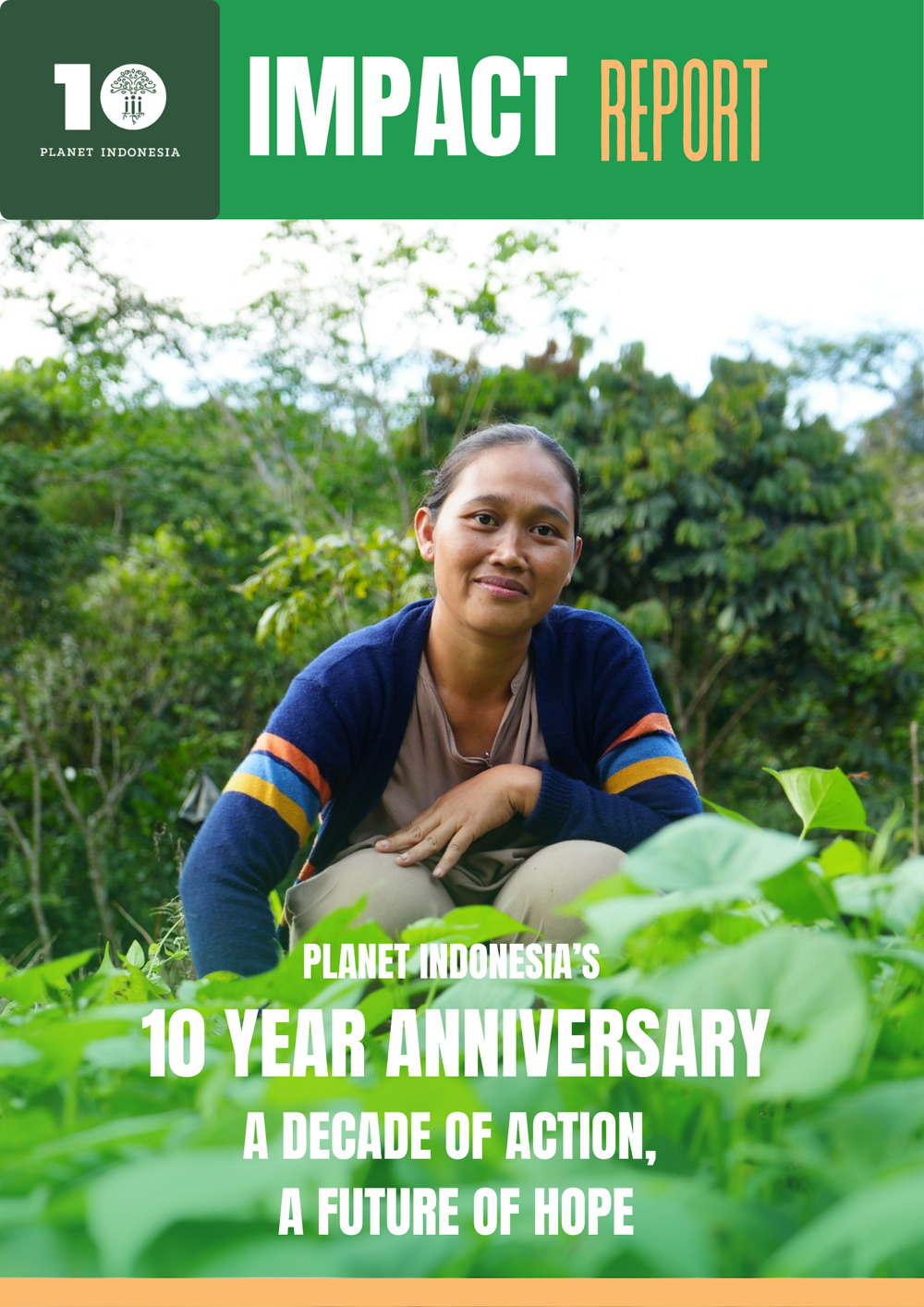
In 2024, Planet Indonesia celebrated its 10-year anniversary of conserving at-risk ecosystems through community-led governance.
To honor this milestone, we produced a website that showcases our journey so far, stories from the community members we work with, and our impact to date. This website acts as our 2024 annual report.
Note from our founders:
A decade of action. It almost feels unbelievable that we have hit this milestone from our very humble beginnings when we were figuring out how to tackle these large social, cultural, and environmental crises in our tiny office (that doubled as a house). This milestone reflects our unwavering commitment to conserving at-risk ecosystems across Indonesia and supporting communities in leading the way.
A future of hope. This space aims to celebrate the journey and impact we have had to date and share some of our exciting plans for the future. We invite you to reflect and celebrate with us.
Thank you to all who have joined us and the communities we accompany to support their vision for a better future.
Key points
- Sharing a new initative to help illuminate insights from the field in our new field notes system
- 3701 community members have participated in finance programs
- Community memebers who took business loans had a 19% Net Profit Margin
- Deforestation is decreasing 2-7 times faster in sites where we work
- The use of fire dropped by 65% and in some areas forest cover has increased by 35%
- Communites have recorded a steady reduction in poaching, illegal logging, and encroachment were down 60%
- Launch of the new interactive, digital Learning Center
The term ‘integrated landscape initiative’ (ILI) has gained popularity as an ‘umbrella concept’ that describes projects that aim to explicitly improve food production, biodiversity conservation, and rural livelihoods on a landscape scale.
It describes approaches that consider the entire landscape, including its environmental, social, and economic aspects, by bringing together diverse stakeholders to manage land use in a way that balances competing needs, aiming for sustainable outcomes across the whole system, rather than focusing on isolated issues within the landscape.