<< Back to Learning Center
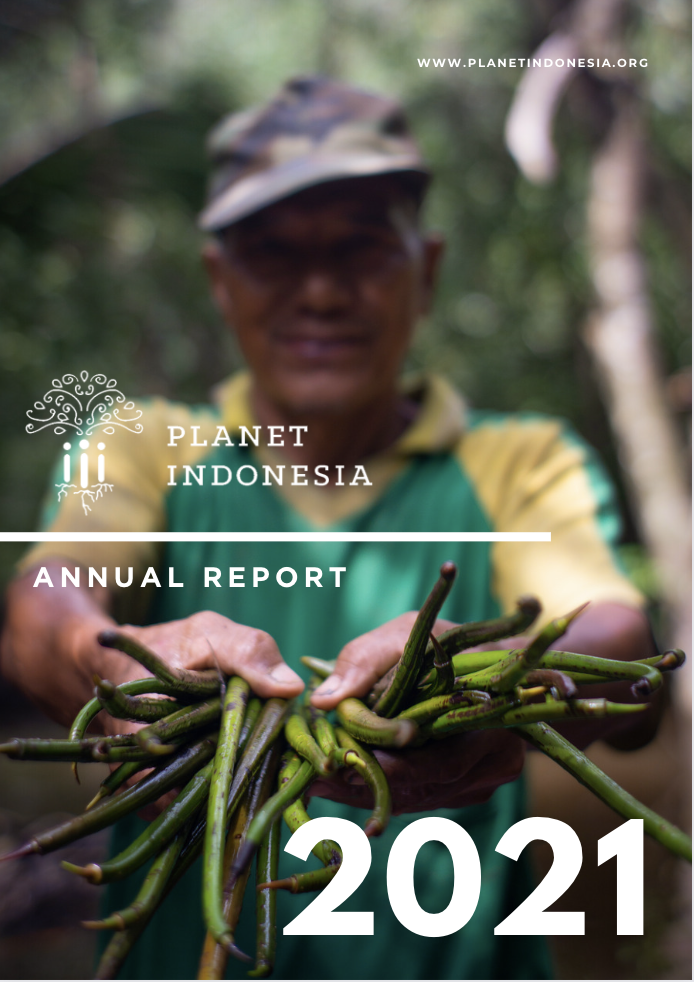
Planet Indonesia’s 2021 Annual Report

Planet Indonesia's 2021 Annual Report details the efforts to conserve at-risk ecosystems in West Kalimantan through a rights-based, village-led approach. Despite the challenges of the COVID-19 pandemic, the organization scaled its impact by expanding into new marine areas, such as the Karimata Marine Reserve, and initiating partnerships with six local organizations across Indonesia.
He we lay out the evidence and work towards our holistic "Core Model" that links community advancement —including rights, governance, and regenerative livelihoods—with environmental protection.
Key points
- Over 400,000 hectares of terrestrial and marine areas were under communty management by the end of 2021, representing a 61.5% increase from the previous year.
- Areas managed by communities saw a 77% reduction in forest loss, with 68,500 trees planted in degraded lands.
- There was a 73% decrease in hunting, encroachment, and logging in patrolled areas, supported by the surrender of 306 rifles.
- Farmers using climate-smart techniques experienced a 55% increase in yields, and community-led savings programs reached a total of $67,014 (969,380,874 IDR).
-Temporary periodic fisheries closures in mangrove areas led to a 29.7% improvement in mud crab yields, directly increasing monthly income for hundreds of coastal families.
- Health and COVID-19 Response: supported 106 health ambassadors who helped over 500 people access vaccinations and nearly 2,000 people receive medical treatment.
Suggested citation
Planet Indonesia. (2021). 2021 Annual Report. Pontianak, West Kalimantan: Planet Indonesia.
Share