What is the response of a key fishery – mudcrabs – to community conservation?

A story of local fisheries management and the first signs of ecological revival.
Coastal communities in Southeast Asia depend on healthy mud crab populations for food and income. Overfishing has put both crabs and community livelihoods at risk, prompting the adoption of community-based no-take zones (CBNTZs), areas where fishing is not allowed.
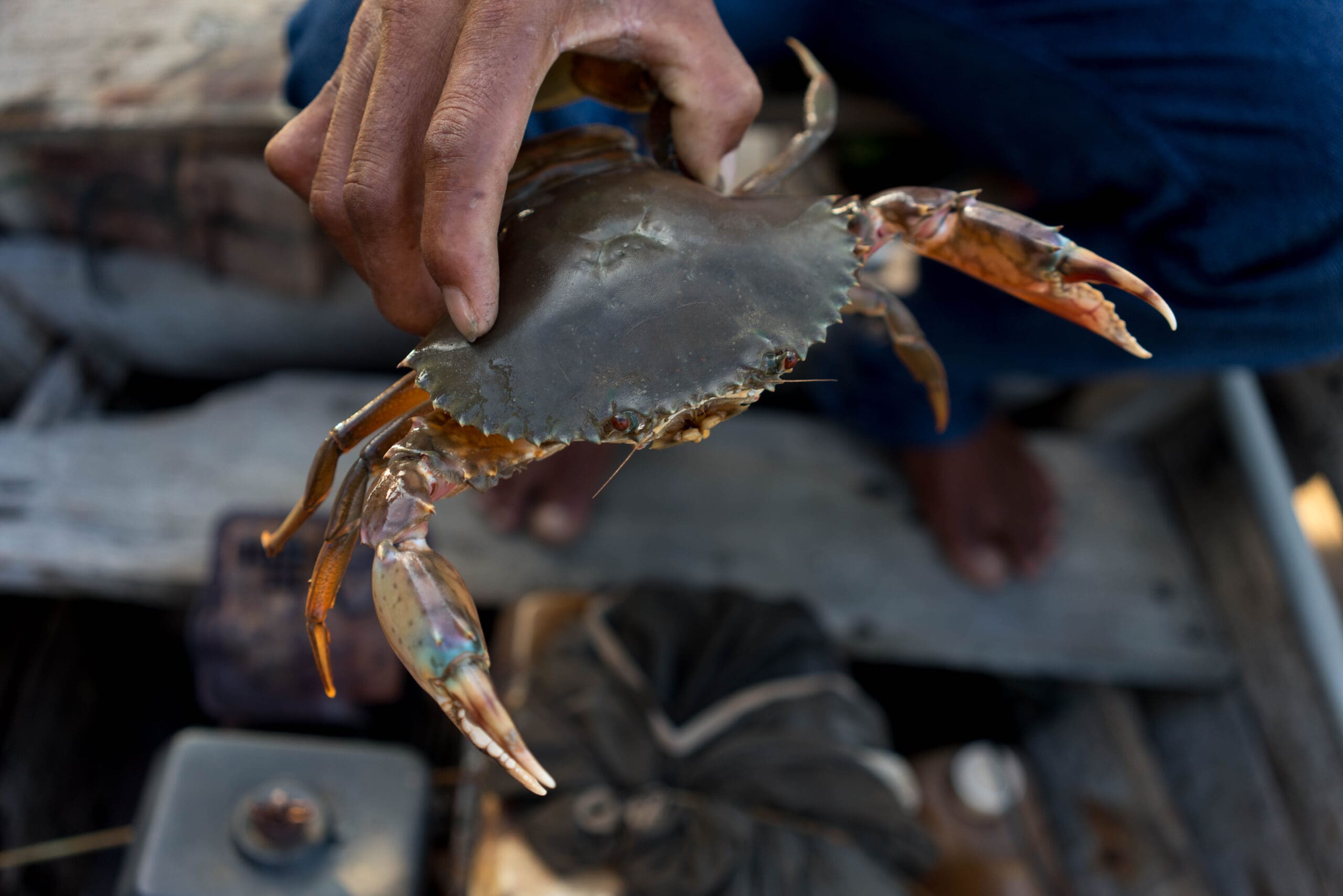
Mud crabs are both ecologically and economically important. They support coastal food systems, but are often harvested before reaching maturity, making their populations vulnerable.
Local community governance groups are taking the lead by establishing no-take zones. These are not outside interventions, but locally managed strategies built on community knowledge, tenure rights, and shared governance.
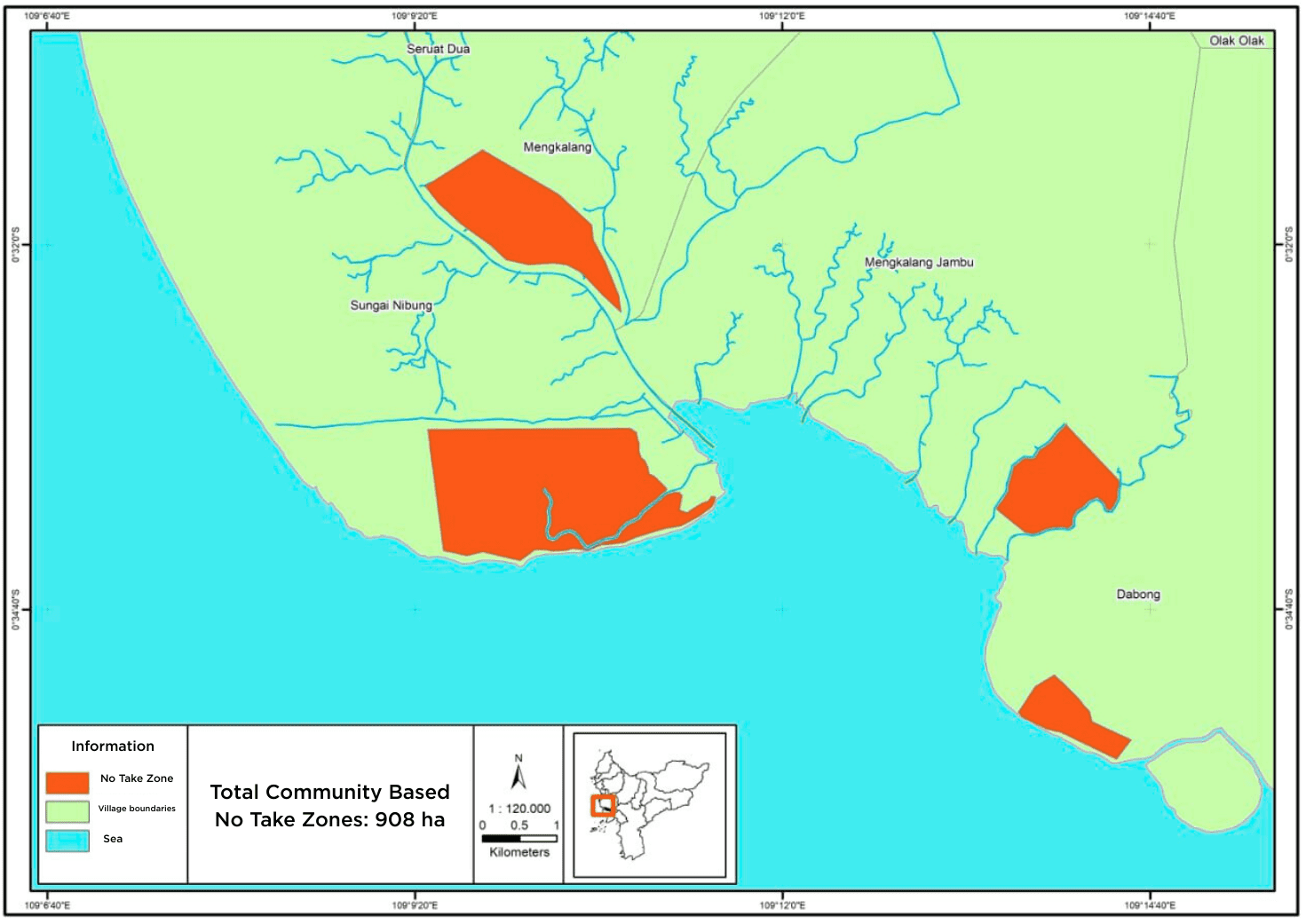
Fig. 1 Map of community determined Core No Take Zones in Kubu Raya.
To measure impact, the study combined two types of data:
Fisheries independent transects and surveys.
Measuring crab size and weight inside and adjacent to CBNTZs.
Fisher enumerator reports.
On catch per unit effort (CPUE) documenting catch per fishing trip over time.
This dual approach provides a more accurate and holistic picture of the state of the mudcrab fisheries and effectiveness of CBNTZs.
Findings
Result 1:
Fisheries independent surveys showed us:
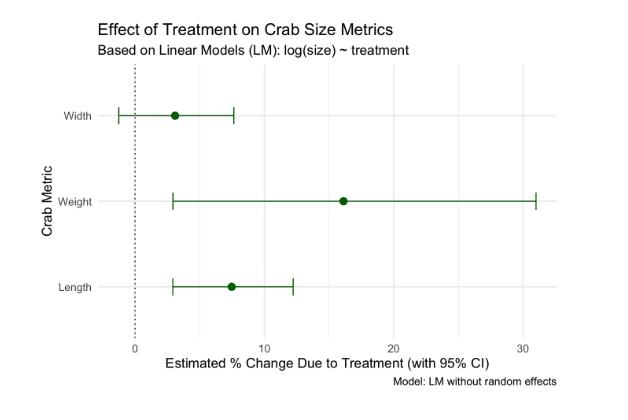
In no-take zones, crabs were on average 16% heavier and 7.5% longer than in areas open to fishing.
Result 2:
Fisheries dependent surveys showed us:
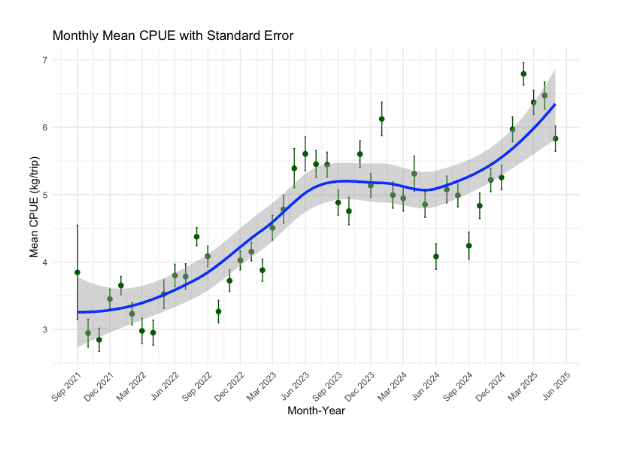
Catch rates (CPUE) also rose by up to 78% in some years after protection began. These are hopeful signs, and indicate a significant increase in catch per trip for small-scale fishers in the region
Result 3:
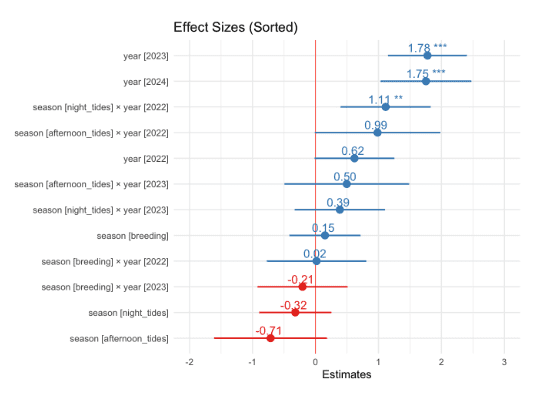
While fishermen know that seasonality does affect their catch, as time goes on and the protection is in place for longer, seasonality is less important than year for CPUE. Meaning, as expected, the impacts of the CBNTZ take time to emerge and get stronger over time.
Results vary by village, river, and season. Some areas showed more substantial improvements than others, and community members themselves are concerned about ongoing overfishing and the need for broader protection.
Despite these improvements, most crabs are still being caught at sizes below maturity. This means that while progress is visible, the fishery is still under very high pressure and not yet sustainable for the long term.
SUMMARY

Here are the three major points of findings:

When communities determine fisheries management based on local needs and community knowledge, Mudcrab populations respond positively, in time becoming healthier with benefits to small-scale fishers' livelihoods.


The case study highlights the importance of continuous monitoring and listening to community voices.

Continued recovery will require protecting larger crabs, supporting governance, and adapting strategies as new challenges and opportunities emerge. Community leadership, transparency, and adaptive management are key for lasting success.
Thank you to Blue Action Fund for supporting this work.
Sign up to recieve news and updates.

© 2024 Planet Indonesia

Planet Indonesia is a 501(c)(3) nonprofit organization.

 By signing up you agree that we can contact you via our email newsletter and to our Terms and Conditions and Privacy Policy.

The term ‘integrated landscape initiative’ (ILI) has gained popularity as an ‘umbrella concept’ that describes projects that aim to explicitly improve food production, biodiversity conservation, and rural livelihoods on a landscape scale.

It describes approaches that consider the entire landscape, including its environmental, social, and economic aspects, by bringing together diverse stakeholders to manage land use in a way that balances competing needs, aiming for sustainable outcomes across the whole system, rather than focusing on isolated issues within the landscape.