Community Perceptions on Planet Indonesia’s
Theory of Change in Kubu Raya

Using participatory impact assessments as an evaluation method.
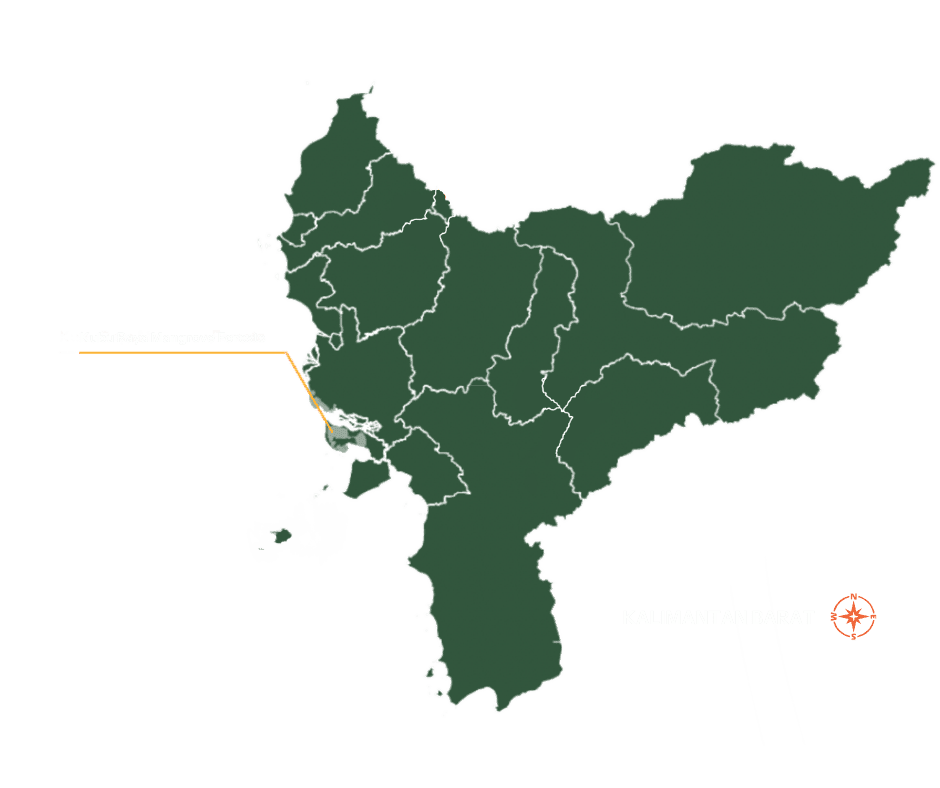
Our work in Kubu Raya
Started in 2017
Aims to conserve 140,000 hectares of tropical coastal and mangrove habitat
Supports 17 Community-led Governance Bodies
Directly involves 2,153 individuals
In 2023, we assessed the impact of our programme activities through the lens of community members.
Why Participatory Impact Assessments?
PIAs prioritize community input in evaluating project outcomes.
click to expand
Data Collection
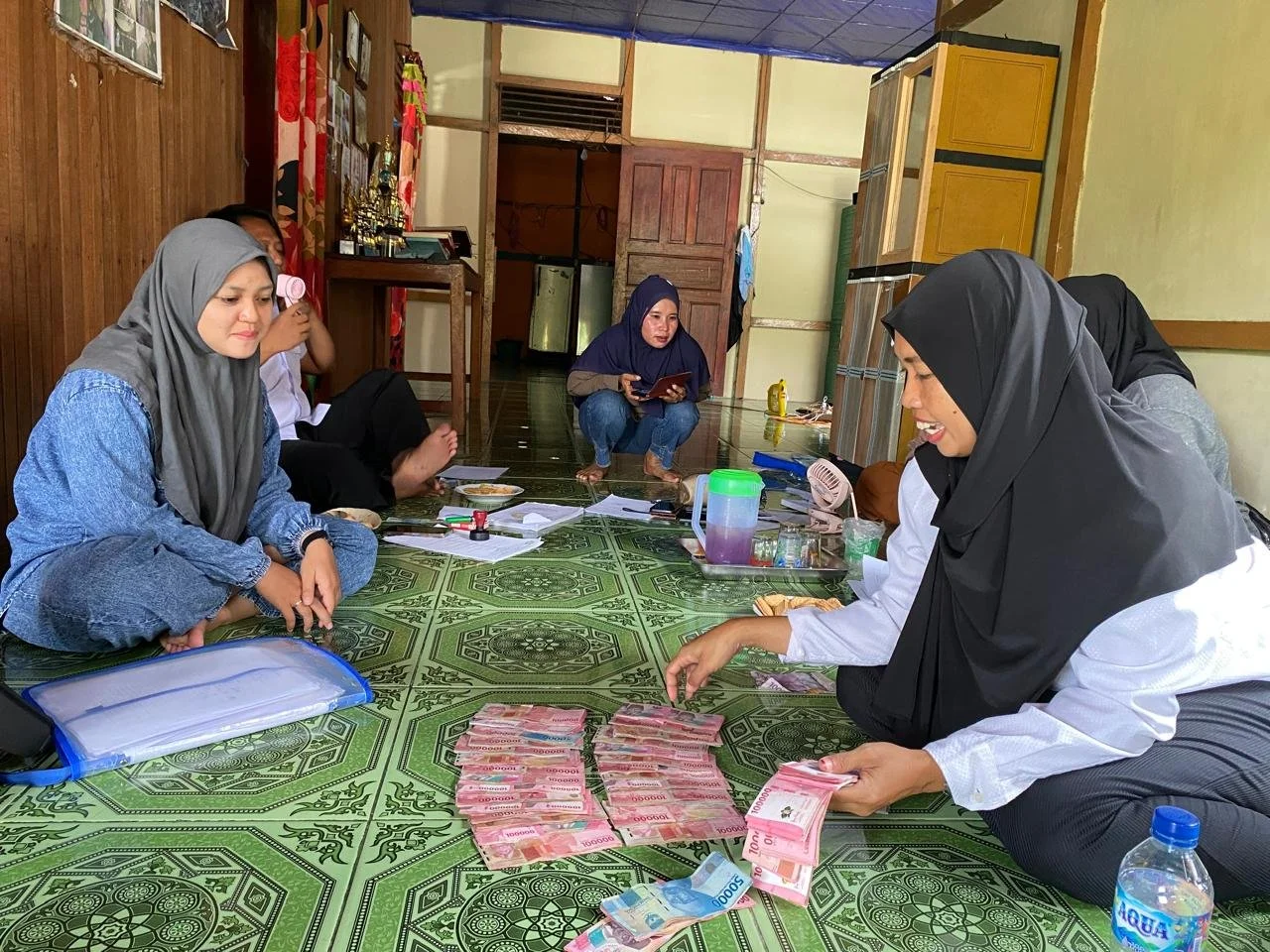
Data was collected by trained field facilitators across 5 coastal villages in Kubu Raya
+146 Participants
+12 Focus Group Discussions
51% Women
60+ hours of survey and discussion time
Steps
1.
Within the first step of the PIA, members created an activity list based upon their knowledge of programme progress to date. They were then asked to score each of the activities for each of the following criteria.
1. The importance of an activity as a motivator to join community governance.
2. The importance of the activity for their daily life.
3. The time expended by the community/individual in implementing this Activity.
2.
The second step of the PIA was to create an Influence Matrix based on the results and activities of step one. Activities from step one were discussed, and participants identified changes that have occurred in the community. Participants then consolidated these into six areas of most significant change.
Analysis
what communities said
Part 1: Activity Scoring
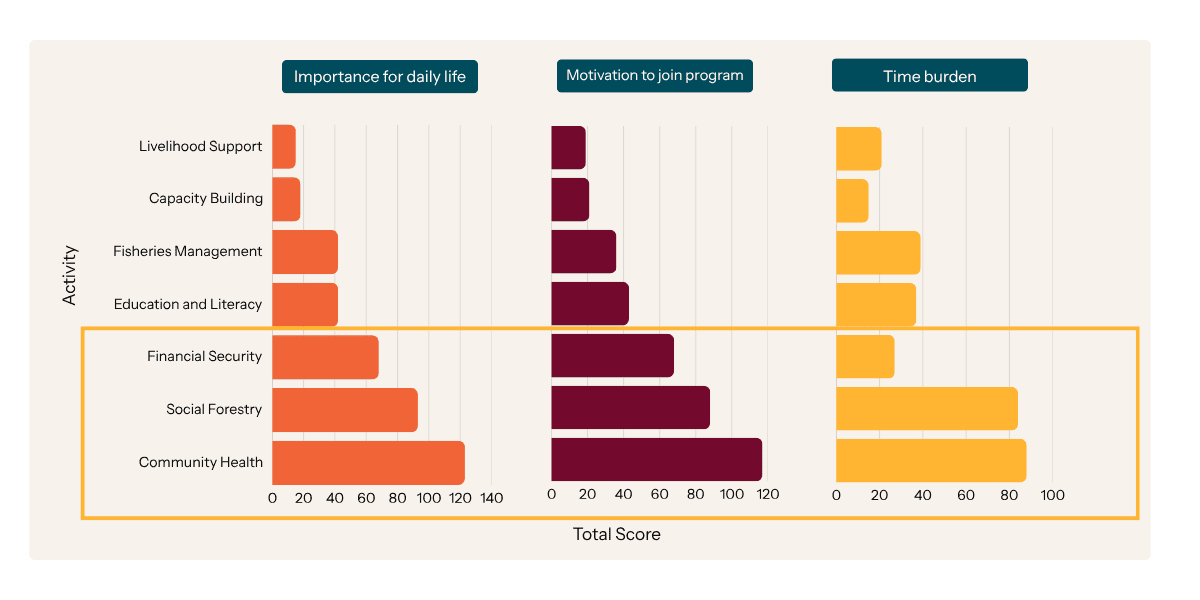
Communities were asked to identify program activities they had participated in, and then score them across 3 variables.
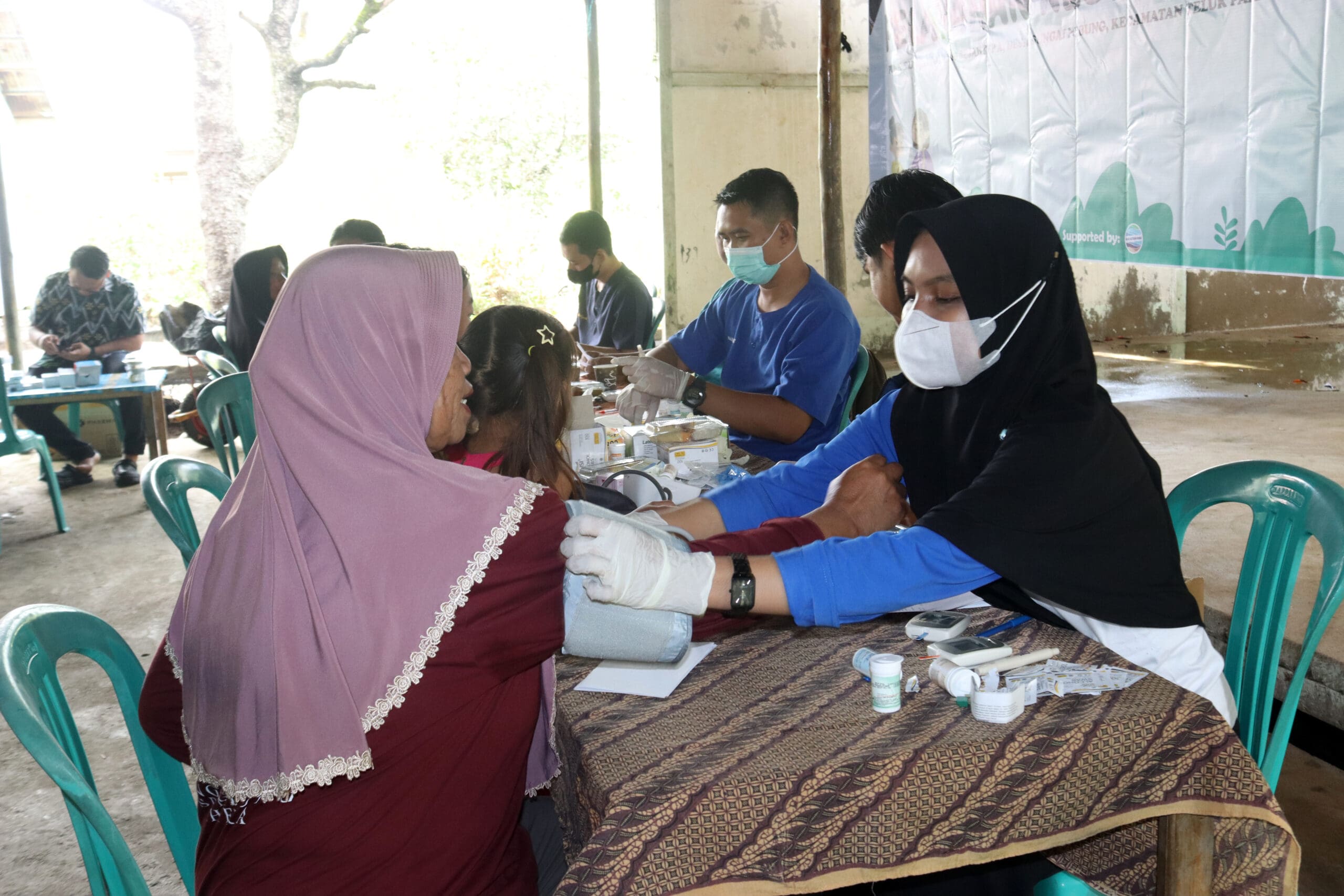
Community Health & Social Forestry
Heath and social forestry program activities received the highest total score as the importance for daily life and motivation to join. 

But, they were also perceived as having the highest time burden.
Financial Inclusion 
Financial security and inclusion was scored as the third most important for daily life and motivation to join the programme. 

But notably, had a much lower time burden, suggesting a perceived high benefit but lower 'cost' or burden by respondents.
Part 2: Influence Matrix
We divided the community representatives into three groups (leaders only, mixed gender, and women-only) and asked them to score the different activities in terms of their degree of influence on the identified outcomes. 

How activities influence outcomes

Mean self-reported score (0–3) linking each activity to each outcome, by respondent group.
Outcomes
Activities
Mean score
3 — strong
2 — moderate
1 — slight
0 — none reported
Health Program
Is perceived by leaders to strongly impact outcomes beyond improved health & healthcare knowledge.
Improved Healthcare
As an outcome was equally impacted by the health program as it was by financial resilience.
Education & Literacy
Contributed to nearly every outcome.
Capacity Building
Contributed to nearly every outcome.
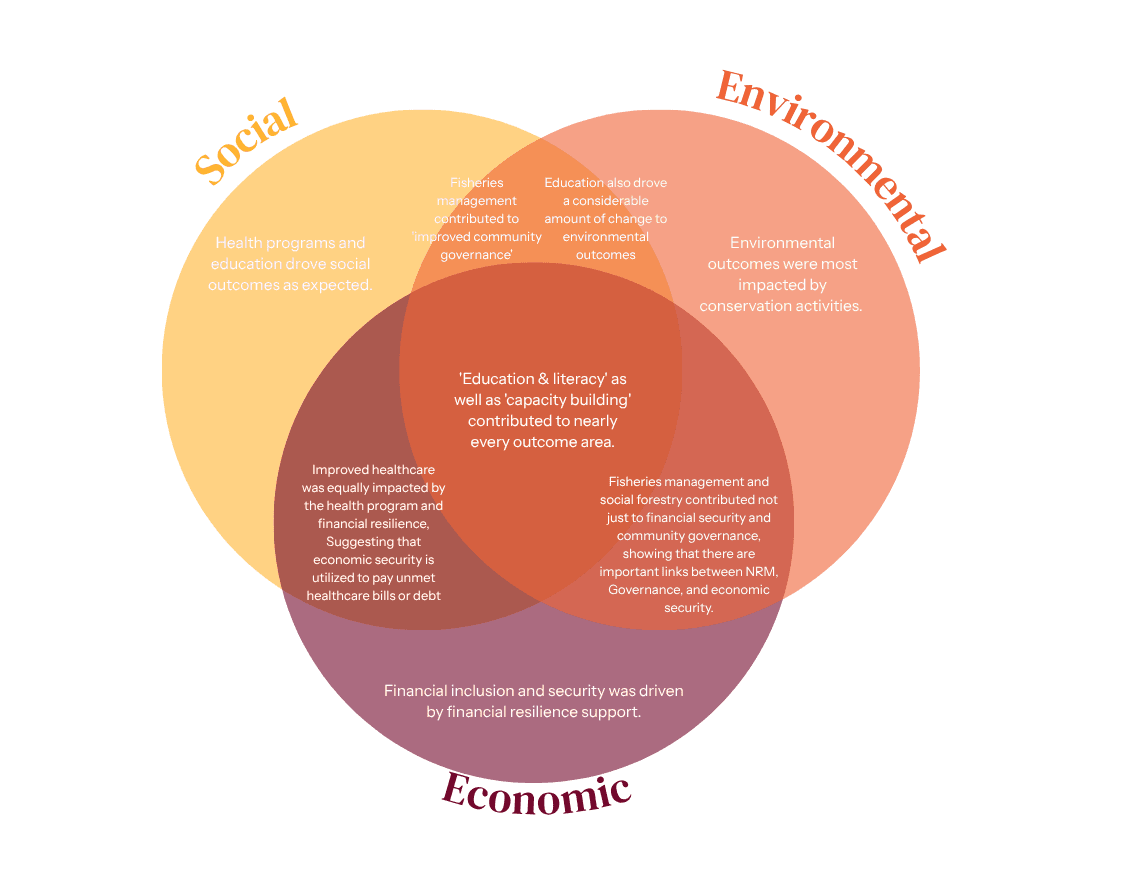
Results show the programme has contributed to a variety of positive outcomes spanning social, economic and environmental dimensions
Unsurprisingly, most pathways of change were in line with the thematic area (e.g. health program contributed to improved healthcare, fisheries management contributed to improved status of the fishery). However, we saw a few interesting pathways of change that suggest the importance of an integrated, holistic approach.
Using a participatory impact assessment framework to evaluate a community-led mangrove and fisheries conservation approach in West Kalimantan, Indonesia
SUMMARY

Here are the major points of the findings:

This study provides evidence that the Planet Indonesia model can be effective in achieving cross-sector conservation, social and economic outcomes.

PIAs allow us to gain insights directly from community members, offering an opportunity to consider qualitative and quantitative socio-economic and conservation outcomes in detail.
Thank you to Blue Action Fund andthe UK Government through Illegal Wildlife Trade Challenge Fund for supporting this work.
Sign up to recieve news and updates.

© 2024 Planet Indonesia

Planet Indonesia is a 501(c)(3) nonprofit organization.

 By signing up you agree that we can contact you via our email newsletter and to our Terms and Conditions and Privacy Policy.

The term ‘integrated landscape initiative’ (ILI) has gained popularity as an ‘umbrella concept’ that describes projects that aim to explicitly improve food production, biodiversity conservation, and rural livelihoods on a landscape scale.

It describes approaches that consider the entire landscape, including its environmental, social, and economic aspects, by bringing together diverse stakeholders to manage land use in a way that balances competing needs, aiming for sustainable outcomes across the whole system, rather than focusing on isolated issues within the landscape.
Through participatory impact assessments, community members lead the evaluation of their own development, strengthening local ownership and ensuring their perspectives shape decisions.
Community members possess valuable insights about their environment and challenges. PIAs utilize this knowledge for more accurate assessments of impacts that external evaluators may overlook.
Traditional evaluation methods may overlook critical community concerns. PIAs identify relevant impact indicators that reflect the social, cultural, and economic changes important to the affected individuals.
PIAs open space for mutual dialogue between YPI and community members, deepening trust and strengthening collaborative relationships where people feel respected and genuinely involved in shaping outcomes.
PIAs surface real-time insights from the communities closest to the work, enabling YPI to adjust strategies based on lived experience rather than assumptions. This continuous feedback loop strengthens adaptive management, ensuring programs remain responsive to community priorities and evolving conditions on the ground.